MBBS from Caribbean Countries: Opportunities and Challenges for Indian Students
Caribbean medical schools have become an attractive option for students aspiring to become doctors, particularly those who wish to build a career in the United States or Canada. Most medical universities in the Caribbean follow the North American medical education model. Instead of a direct 5½-year MBBS program, students generally complete a pre-medical or bridge program followed by a four-year MD (Doctor of Medicine) curriculum. Clinical rotations are often conducted in affiliated hospitals in the United States.
This education system differs significantly from the traditional MBBS structure followed in countries such as India, Russia, Georgia, Kazakhstan, and several European nations. As a result, Indian students should carefully evaluate whether the complete program satisfies the requirements prescribed by the National Medical Commission (NMC) before taking admission.
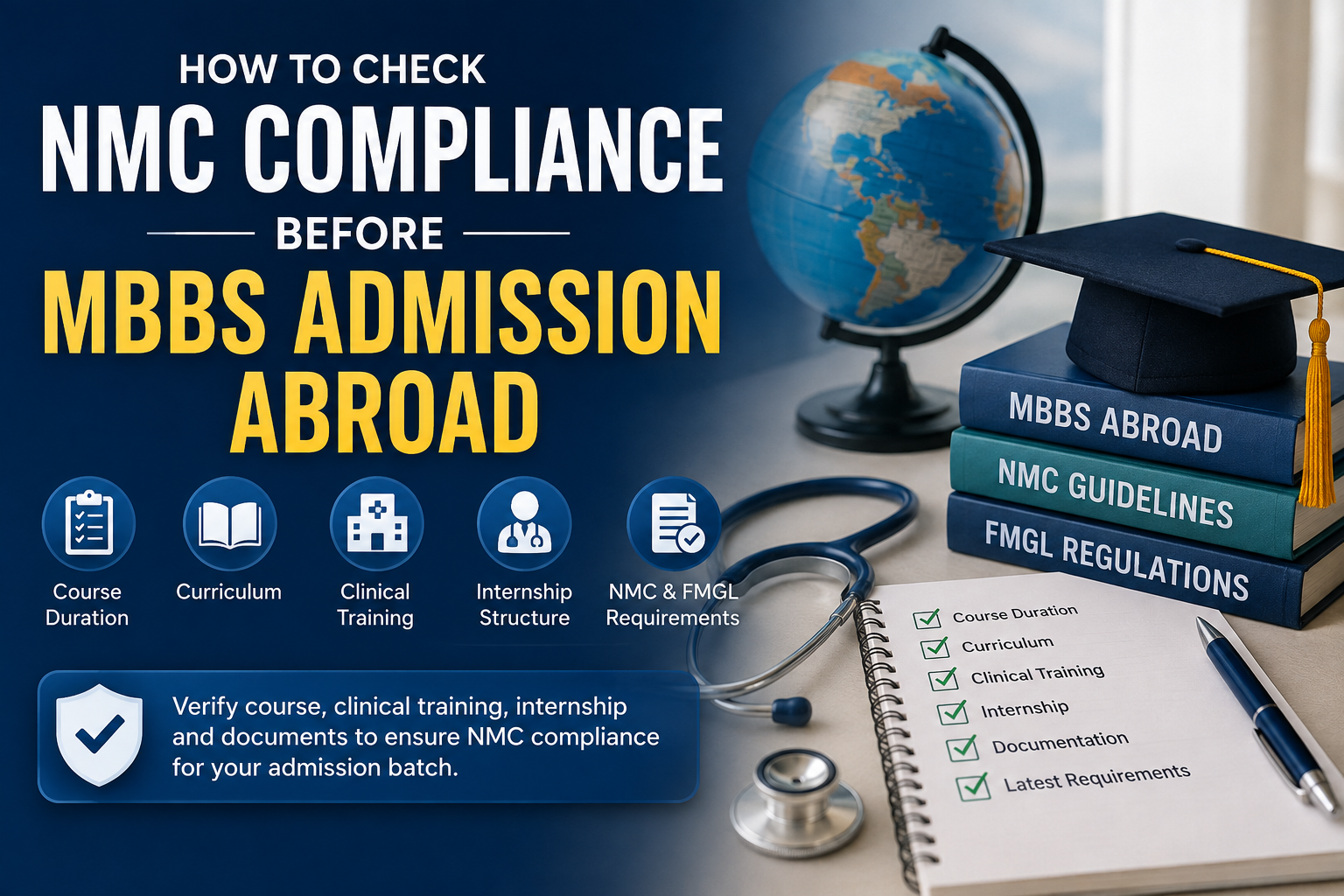
One of the most important considerations is the NMC’s eligibility criteria for foreign medical graduates. The regulations require a minimum duration of 54 months of medical education, followed by a compulsory 12-month internship. Students should therefore verify whether the combined duration of the bridge course, MD program, and internship fully complies with these requirements. It is advisable not to rely solely on promotional advertisements or verbal assurances from consultants.
Many Caribbean universities highlight their pathway to the United States through the United States Medical Licensing Examination (USMLE). While this pathway certainly exists, students must understand that clearing the USMLE is highly competitive and requires exceptional academic preparation, strong clinical knowledge, and consistent performance. Simply enrolling in a Caribbean medical school does not guarantee residency or medical practice in the United States.
For students whose primary objective is to establish a medical career in the US, a reputed Caribbean medical school may be a suitable option, provided they are prepared for the demanding USMLE journey. However, students intending to return and practice in India should conduct thorough due diligence regarding NMC compliance, internship structure, and future eligibility requirements.
Choosing a medical university is one of the most important decisions in a student’s career. Rather than being influenced by marketing claims, students should verify official regulations, compare curriculum structures, and seek transparent guidance before making a final decision.
FMGE Performance (2012–2025)
(2012–2025)
(2012–2025)
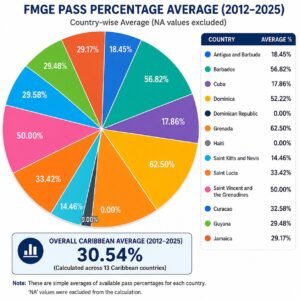
The overall FMGE pass percentage across Caribbean countries from 2012–2025 is
30.54%. During the same period,
All American University, Jamaica recorded an average FMGE pass percentage of
29.17%, which is close to the regional average. While FMGE performance is an important indicator, students should also evaluate NMC compliance, curriculum quality, clinical training, internship opportunities, and long-term career prospects before making an admission decision.
Final Advice
An informed decision today can prevent academic and regulatory complications in the future. Always verify official regulations, compare universities carefully, and seek transparent guidance before selecting a medical institution abroad.